Showing posts with label SOCIETY. Show all posts
Monday, October 3, 2016
DEAD BROKE - Linda Fulkerson - One Free Book
Dear Readers, I loved this book, and not just because it takes place in my home state and I recognized so many places I�d been. If you love a good mystery/suspense, this book is for you.

Welcome, Linda. Tell us how much of yourself you write into your characters.
The protagonist in my River Valley Mysteries series, (Andrea �Andy� Warren), is a combination of mine and my daughter�s personalities. She is a freelance sports photographer. I was once a newspaper sports writer, and my father was a professional photographer, so I drew on my knowledge of those careers as I wrote.
That�s why they rang true as authentic. What is the quirkiest thing you have ever done?
I enlisted into the Marine Corps on a dare. I served for nine years.
Wow! When did you first discover that you were a writer?
I became interested in writing while I was a copy-editor for our small town newspaper. I soon started writing features for local magazines and began querying major national magazines. I quickly collected many generic, photo-copied rejection slips. One day, I received a rejection letter from an editor at Woman�s Day that was signed in ink with a hand-written note in the margin about what a great idea my pitch was, but, she explained, it just wasn�t something they needed at that time. I was so excited to get a real note from an editor that I danced around the house, waving the letter. My family thought it was an acceptance letter and didn�t understand why I was so excited about a rejection notice. Getting a personal note meant my query had made it past the slush pile onto the desk of a real editor whose name actually appeared on the magazine�s masthead. That�s the day I told myself, �I can do this!�
Tell us the range of the kinds of books you enjoy reading.
My favorite genres are mystery and fantasy, but I read a lot of historical romance, too. I appreciate any book that can quickly pull me into the life of an interesting character. My two all-time favorite classic authors are Raymond Chandler and Mark Twain. I also love reading authors who use unique ways to describe common situations or emotions. Douglas Adams was a master at that. I enjoy humor and try to include it in my writing. My favorite nonfiction authors are Erma Bombeck and Robert Fulghum. I read a lot of writing craft books, too, and James Scott Bell is the absolute best at explaining various aspects of craft. For Christian fiction, my favorite authors include Kristin Billerbeck, Frank Peretti, Susan May Warren, and many others. I�ve learned to never start a Susan May Warren book unless I can devote enough time to finish it, because I typically read her books in one sitting.
How do you keep your sanity in our run, run, run world?
I start nearly every morning with a 2-mile walk through the woods (we live in the country) with my husband, and I take a nap every day from 1-1:30 pm. That gives me the extra oomph I need to be productive until bedtime, which for us, is 1 am. (Hubby works second shift.) I try to take life one day at a time and rarely stress. Like everyone else, I stay incredibly busy between church and family, my digital marketing services/graphics design company, consulting/coaching, speaking engagements, and writing. I start each day by making a to-do list and march down it as much as possible. Things with a deadline get done first. Things that don�t get done get put at the top of the next day�s list. But the main thing that keeps me sane is trusting in God�s promise that everything will work out for the good.
How do you choose your characters� names?
For the mystery series, most of the names popped into my head � names I like, names I�ve heard throughout the years. I keep a spreadsheet of character names, descriptions, speech patterns, occupations, relationships to other characters, etc., for quick reference so I won�t get confused on future books in the series. I�m working on another series in a speculative genre (dystopian), and I did research on names with specific meanings. I used Latin and Hebrew names for both the characters and place names. The first book in that series is still in progress.
What is the accomplishment that you are most proud of?
Raising four children to adulthood, who are all Christians and who are all self-sufficient, is something for which I�m extremely grateful, but, of course, my husband played a huge role in that feat. Personally, it would be my first book, The Prodigal Daughter: Hope for Runaway Christians and Those Who Await Their Return, a memoir my mother encouraged me to write.
If you were an animal, which one would you be, and why?
LOL � probably my dog (an 11-year-old miniature dachshund). She is spoiled beyond belief and sits on my lap while I write.
What is your favorite food?
Pizza with sausage, mushrooms, and onions. Oh, and Dr Pepper.
What is the problem with writing that was your greatest roadblock, and how did you overcome it?
I�ve had a lot of challenges with writing during the past two years due to health issues for both of my parents. They both passed away during the past year, just nine months apart. I guess my biggest roadblock was guilt from wanting to keep writing while still helping take care of my parents, so I had to learn to juggle my work instead of setting aside large blocks of writing time, which is what I was used to doing.
My mother encouraged me to keep writing. Even though she had late-stage cancer, she would ask what I was working on and how it was coming along. One of the biggest barriers for me was learning to write in locations other than the comfort of my desk chair, such as my car and/or hospital waiting rooms.
With God�s help and encouragement from my family, especially my daughter, to publish one novel, two nonfiction books, and two coloring books for writers during the past year.
Tell us about the featured book.

Tagline: Sometimes home is sweeter when it�s in a different time zone.
Blurb: Sports photographer Andrea �Andy� Warren, whose faith has dipped to the same depths as her checkbook balance, receives a phone call that forces her return to the Arkansas hometown she renounced, where she hopes to avoid her meddling mother, her ex-fianc�, and the local sheriff.
Please give us the first page of the book for my readers.
The only force with sufficient power to propel my feet forward is the inescapable awareness of my checkbook balance. The figure pounds inside my head like the beat of a bad disco song, and I find myself moving in step with its cadence. Constance , you owe me for this one. In reality, I owe her. But who wants to muddle a perfectly good mope-fest with the facts?
After a mental pep rally, I suck in a deep breath, adjust my camera bag�s shoulder strap, and take another step. I can do this.
I stride into the shadow of the hulking arena, grateful for the momentary reprieve the shade provides from the Phoenix heat. Loose change shimmers from the depths of a decorative fountain near the entrance, tempting passersby to toss in a coin or two. No sense wasting the few cents I have, though. My wish won�t come true.
My new Jimmy Choo slides clap against the concrete floor as I make my way through the VIP tunnel. At the corridor�s mid-point, a man wearing a black T-shirt emblazoned with the Week Night Wrestling logo sits behind a table marked �Security.� He�s a burly guy, bald, with gray stubble, and looks to be nearing sixty. Probably a WNW has-been who won�t let go.
A roar from the crowd invades the passageway. The noise bounces off the walls and reverberates in my ears. I flip open my wallet to reveal media credentials, lean toward the guard, and
How can readers find you on the Internet?
The easiest place to find me is my website, LindaFulkerson.com. Just above the site�s footer, you can find links to all my social media profiles � Twitter, Facebook, YouTube, Google+, LinkedIn, Pinterest, and Instagram. I�d love for people to connect with me on their favorite social media platform(s).
Thank you, Linda, for sharing this book with us. I am eager for the next book to come out. We need to feature it on the blog, too.
Readers, here are links to the book. By using one when you order, you help support this blog.
www.amazon.com/Dead-Broke-River-Valley-Mysteries/dp/153513285X/ref=tmm_pap_swatch_0?_encoding=UTF8&qid=&sr= Paperback:
www.amazon.com/Dead-Broke-River-Valley-Mysteries/dp/153513285X/ref=tmm_pap_swatch_0?_encoding=UTF8&qid=&sr= Paperback:
Dead Broke (River Valley Mysteries Book 1)
 - Kindle
Leave a comment for a chance to win a free copy of the book. You must follow these instructions to be in the drawing. Please tell us where you live, at least the state or territory or country if outside North America. (Comments containing links may be subject to removal by blog owner.)
Void where prohibited; the odds of winning depend on the number of entrants. Entering the giveaway is considered a confirmation of eligibility on behalf of the enterer in accord with these rules and any pertaining local/federal/international laws.
The only notification you�ll receive is the winner post on this blog. So be sure to check back a week from Saturday to see if you won. You will have 4 weeks from the posting of the winners to claim your book.
If you�re reading this on Goodreads, Google+, Feedblitz, Facebook, Twitter, Linkedin, or Amazon, please come to the blog to leave your comment if you want to be included in the drawing. Here�s a link:
Http://lenanelsondooley.blogspot.com
Sunday, October 2, 2016
How Long Will It Matter?
It has been about a year or so since one of my former students reached out to me in a private message on Facebook. Now working at a neighboring school with a friend of mine, she'd seen my name pop up and wondered if that could be the Miss Natzke who worked at Friendswood High School all of those years ago. She was fourteen when we first met, a freshman in high school, and I'd just turned twenty five, a third-year teacher and brand-new coach, fresh out of coaching clinic trying to make a go of it on the volleyball court.
It made my heart happy to hear from her. I remembered her well, not so much because I stepped into her story but because her mom stepped into mine. I credit her mom with helping me reconnect spiritually during a time in my life when I wasn't being spiritually fed. As I reflect, it was bold, out-of-the-box thinking to invite your daughter's young teacher and coach to church.
Then, a month or so ago, an inquiry: Would I have some time on September 30th for a visit? Without hesitation, I said, "Absolutely!" I thought it'd be super fun to see her again, to show her around her old stomping ground as she'd attended Westwood during her formative years, and to meet the amazing adult, teacher, mom that she has become.
Then, a month or so ago, an inquiry: Would I have some time on September 30th for a visit? Without hesitation, I said, "Absolutely!" I thought it'd be super fun to see her again, to show her around her old stomping ground as she'd attended Westwood during her formative years, and to meet the amazing adult, teacher, mom that she has become.
What a treasured gift it was to see her again;
does it sound weird to say I wanted to keep her?

It has been thirty years.
Let that soak in.
Thirty years.
In a way, it feels just like yesterday.
But truly, it was a lifetime ago.
Here's the coolest part.
She doesn't remember me for the awesome handouts she completed in Spanish class. She doesn't necessarily remember the engaging games we played as we conjugated verbs and acquired vocabulary. She doesn't even remember our win-loss record on the court {though I do remember her hustle as a setter!}.
She shared that what she remembers is that
"you had a dynamic, caring personality with a love of life."
And she told me that it was refreshing to be in my presence.
That is music to my soul ...
and it makes me want to care more.
To connect more.
To love more.
To reach out more.
It makes me hope that I've created those caring connections
more often than not.
Because I know that not all of my students
have these joyful memories of our interactions.
It makes me cognizant of what really matters.
And it makes me want to ripple that out
as far and wide as I possibly can.
Until I can't anymore.
So today, a wish for a Happy October, and a challenge:
What will you do today, this week, this month
that really matters?
How will you know it really matters?
And for how long will it really matter?
Oh, and do a former teacher or mentor a favor;
reconnect with them, to let them know
that who they are
and what they did for you
really matters.
Thank you, Kelly, for finding joy in the journey
and bringing it back to share it with me all those years later.
Your visit really mattered to me.

Guest post by Paul Draus and Juliette Roddy

Paul Draus and Juliette Roddy have been involved in street-level sociological research in Detroit for over ten years. Roddy is an economist and a member of the Sault Ste. Marie Tribe of Ojibwe Indians. She studies substance use, recovery and re-entry in the city of Detroit and teaches health policy and health economics in the Health and Human Services Department at the University of Michigan-Dearborn. Draus is professor of sociology at the University of Michigan-Dearborn. His research resides at the intersection of health and urban ethnography, and is especially focused on the life of marginalized populations in post-industrial cities. His research with Juliette Roddy, Mark Greenwald and other co-authors has integrated ethnographic and economic data to examine the everyday lives of Detroit heroin users, street sex workers, and other residents of forsaken neighborhoods.
I invited Paul and Julie to provide a short example of their ethnographic work in Detroit for Understanding Society. Thanks, Paul and Julie!
Scraping Black Bottom: Linking Memory, Identity and Community in Detroit
Paul Draus and Juliette Roddy
We have been traipsing up and down Detroit streets for a number of years, in the course of carrying out various research projects and sometimes just out of curiosity. Like any other city, Detroit reveals more on foot than it does to the casual windshield or media-based observer. This being the Motor City, and the automobile being one of the main vehicles of both its early 20th-century prosperity and its late 20th-century deconstruction, it seems particularly appropriate to abandon one�s car in order to explore the remnants of the city left behind.
We use the word remnant rather than ruin deliberately, to counter the impression that Detroit is abandoned, empty or vacant, that it is simply a blank slate waiting to be rebuilt or reimagined by entrepreneurial newcomers or self-styled urban pioneers. While Detroit�s open spaces and ghostly buildings with their empty eyes do invite one�s imagination to wander, our on the ground encounters and interviews reveal a city that not only still lives, but struggles and asserts itself even more vigorously against the tide of withdrawn resources that has sucked its neighborhoods in a tightening spiral of disinvestment, neglect, escape and despair. These individuals express a powerful sense of pride in what Detroit has been, as well as a belief in its future potential, though tempered by that weary skepticism borne of hard experience and past disappointments.
Here we focus on one mobile interview, with a man we call �Mack,� a lifelong resident of the city�s once vibrant and now desolate-seeming East Side. Theoretically we draw upon the ideas of Deleuze, Guattari, and DeLanda, as well as the concepts of Yi-Fu Tuan, who wrote that, �Space and place are basic components of the lived world; we take them for granted. When we think about them, however, they may assume unexpected meanings and raise questions we have not thought to ask� (Space and Place: The Perspective of Experience, p. 3). The form of this interview was a movement across the landscape, involving the three of us, and a digital recorder. As he led us on a walk through this territory that he knew intimately, we invited him to share whatever thoughts and observations came to mind, while occasionally asking questions to clarify what he said or understand what we were seeing.
This movement and these traces call to mind Deleuze and Guattari�s concept of a line of flight, illustrated in A Thousand Plateaus with the image of a wolf life, which appears as nothing more than a set of tracks across a field of snow. The line of flight represents a departure from regularity, a kind of disruption of fixed status, like a deer leaping over a fence, which contains possibility but also implies a return to regularity.

The line of flight is closely connected to the concept of the rhizome, which is described by Deleuze and Guattari using spatial terminology, �Unlike the graphic arts, drawing or photography, unlike tracings, the rhizome pertains to a map that must be produced, constructed, a map that is always detachable, connectable, reversible, modifiable, and has multiple entranceways and exits and its own lines of flight" (Deleuze and Guattari, A Thousand Plateaus: Capitalism and Schizophrenia, 1987, p. 21).
We can�t claim to understand all of D-G�s thought, which is somewhat elliptical and enigmatic by design (1,000 plateaus representing non-hierarchical levels of thought, a multiplicity, in direct contrast to traditional concepts of structure as a set of nested layers or arguments building toward a single thesis), but we also can�t help seeing the connection between the Wolf Line and the traces we see in Detroit�s shifting landscape. D-G write:

It is harder to take a picture of what has been materially and socially lost. A related photograph below was taken across the street from the house pictured above, but one struggles to place it. The fragmented sidewalk gives an indication that this is a residential area, and the presence of the invasive species phragmites australis in the foreground provides an indication of a high water table, but aside from the hands of the speaker in the lower right hander corner of the photograph there are few clues as to the social character of this space. Mack comments on this active absence, which is not a nothingness, a non-thing, but more like a memory, a ghost or a wound.

Another lot contained what might be an unremarkable monument�a single concrete planter. However, this object�s persistence rendered it worthy of remark.


Scraping Black Bottom: Linking Memory, Identity and Community in Detroit
Paul Draus and Juliette Roddy
We have been traipsing up and down Detroit streets for a number of years, in the course of carrying out various research projects and sometimes just out of curiosity. Like any other city, Detroit reveals more on foot than it does to the casual windshield or media-based observer. This being the Motor City, and the automobile being one of the main vehicles of both its early 20th-century prosperity and its late 20th-century deconstruction, it seems particularly appropriate to abandon one�s car in order to explore the remnants of the city left behind.
We use the word remnant rather than ruin deliberately, to counter the impression that Detroit is abandoned, empty or vacant, that it is simply a blank slate waiting to be rebuilt or reimagined by entrepreneurial newcomers or self-styled urban pioneers. While Detroit�s open spaces and ghostly buildings with their empty eyes do invite one�s imagination to wander, our on the ground encounters and interviews reveal a city that not only still lives, but struggles and asserts itself even more vigorously against the tide of withdrawn resources that has sucked its neighborhoods in a tightening spiral of disinvestment, neglect, escape and despair. These individuals express a powerful sense of pride in what Detroit has been, as well as a belief in its future potential, though tempered by that weary skepticism borne of hard experience and past disappointments.
Here we focus on one mobile interview, with a man we call �Mack,� a lifelong resident of the city�s once vibrant and now desolate-seeming East Side. Theoretically we draw upon the ideas of Deleuze, Guattari, and DeLanda, as well as the concepts of Yi-Fu Tuan, who wrote that, �Space and place are basic components of the lived world; we take them for granted. When we think about them, however, they may assume unexpected meanings and raise questions we have not thought to ask� (Space and Place: The Perspective of Experience, p. 3). The form of this interview was a movement across the landscape, involving the three of us, and a digital recorder. As he led us on a walk through this territory that he knew intimately, we invited him to share whatever thoughts and observations came to mind, while occasionally asking questions to clarify what he said or understand what we were seeing.
This movement and these traces call to mind Deleuze and Guattari�s concept of a line of flight, illustrated in A Thousand Plateaus with the image of a wolf life, which appears as nothing more than a set of tracks across a field of snow. The line of flight represents a departure from regularity, a kind of disruption of fixed status, like a deer leaping over a fence, which contains possibility but also implies a return to regularity.
The line of flight is closely connected to the concept of the rhizome, which is described by Deleuze and Guattari using spatial terminology, �Unlike the graphic arts, drawing or photography, unlike tracings, the rhizome pertains to a map that must be produced, constructed, a map that is always detachable, connectable, reversible, modifiable, and has multiple entranceways and exits and its own lines of flight" (Deleuze and Guattari, A Thousand Plateaus: Capitalism and Schizophrenia, 1987, p. 21).
We can�t claim to understand all of D-G�s thought, which is somewhat elliptical and enigmatic by design (1,000 plateaus representing non-hierarchical levels of thought, a multiplicity, in direct contrast to traditional concepts of structure as a set of nested layers or arguments building toward a single thesis), but we also can�t help seeing the connection between the Wolf Line and the traces we see in Detroit�s shifting landscape. D-G write:
Bulbs and tubers are rhizomes� Even some animals are, in their pack form. Rats are rhizomes. Burrows are too, in all of their functions of shelter, supply, movement, evasion and breakout.In this sense a neighborhood is also a clearly a rhizome, not a unitary, static reality, but a multiplicity of paths, trajectories, histories, structures, and potentials. Consider for example the following two images, one representing the stability of residence on the East Side, the other its transience:
Interviewee: Now, I wanted to take a picture of that. This where the Polacks stay at.
Interviewer: Is there somebody stayin� there now?
Interviewee: He been�yeah! Yeah. The Polack. Uh, he owned this building, and he owned this. You know? I mean, he owned this house and this right here.
Interviewer: Do you know him?
Interviewee: Huh? I�m aware of him.For Mack, the continued presence of �The Polack� is a reminder of the neighborhood�s persistence. Even though his actual connection to him is tenuous, it retains an importance. It is something to be recorded with a photograph.
It is harder to take a picture of what has been materially and socially lost. A related photograph below was taken across the street from the house pictured above, but one struggles to place it. The fragmented sidewalk gives an indication that this is a residential area, and the presence of the invasive species phragmites australis in the foreground provides an indication of a high water table, but aside from the hands of the speaker in the lower right hander corner of the photograph there are few clues as to the social character of this space. Mack comments on this active absence, which is not a nothingness, a non-thing, but more like a memory, a ghost or a wound.
Interviewee: When you see all the empty fields out here like that, that�s why we�they called it�they called it black bottom, but it ain�t no such thing as a black bottom. Black bottom to us is like a poor neighborhood, because empty fields are empty fields. You know? Nobody�ain�t no stores out here. You have to go a mile away to go to a store, a grocery store. Ain�t no good foods out here. You got little small stores, get some hot dogs or canned foods. Somethin� like that. Now, I�m only take you�
Interviewer: So who calls, uh�you said, uh, people call this area black bottom?
Interviewee: They call the whole black�um, the whole neighborhood black bottom now.
Interviewer: Okay.
Interviewee: Because it a poor neighborhood.Through his narration of these adjoining spaces Mack is tracing the neighborhood�s trajectory from a Polish-dominated enclave of homes and businesses to a majority-Black community, now dominated as much by the plant population as the current human residents. Here we see a home surrounded by green growth, facing a field where the evidence of past density may be difficult to see. For Mack, the empty lot contains within it the past human occupants as well as the plants now flourishing there.
Another lot contained what might be an unremarkable monument�a single concrete planter. However, this object�s persistence rendered it worthy of remark.
Interviewer: Yeah.
Interviewee: Still standin'.
Interviewer: Wow.
Interviewee: Still standin�. Right here. Still�old though, but it still standin�. This right here was in the �80s. This was�it�s so old. It�s like, uh. It�s like, boom. It�s still standing. Nobody ain�t take it.According to Tuan, �A neighborhood is at first a confusion of images to the new resident; it is blurred space, �out there.� Learning to know the neighborhood requires the identification of significant localities, such as street corners and architectural landmarks, within the neighborhood space�� (Tuan 1977, Space and Place: The Perspective of Experience, p. 17).
This passage reveals the constant tension between permanence and transience, between blurred space and significant localities, or using the D-G terms, between territorialization and de-territorialization. As Mack has noted, this single inconspicuous icon is significant simply because �Boom! It�s still there.�
Detroit�s fascination as a city lies not in its ruin, or reconstruction, but in the degree of play that exists between these ever-present potentialities, the struggles over identity and interpretation within these shifting fields, and the perhaps fruitless search for tipping points, clues to its ultimate outcome or meaning. Thus Detroit itself may be seen as a line of flight, unsettling because it seems so continually unsettled, a disruption of expectation, like the pheasant taking flight before our meandering feet.
In that sense, Detroit is not so different from any other city, always becoming, yet constrained by the path lain by its past, distinctive only in degree.
Photo by Tomek Zerek, taken while stomping through Detroit fields with first author
(Can you see the pheasant?)
(For more on the Deleuzian perspective, see Manuel Delanda, A New Philosophy of Society: Assemblage Theory and Social Complexity.)
(For more on the Deleuzian perspective, see Manuel Delanda, A New Philosophy of Society: Assemblage Theory and Social Complexity.)
WINNERS!!!!
Melanie (TX) is the winner of The Long Journey to Jake Palmer by James L Rubart.
Diana (CA) is the winner of The Undoing of Saint Sylvanus by Beth Moore.
Annie (MD) is the winner of Out of the Frying Pan by Michelle Griep.
Donna E (OK) is the winner of the ebook Candy Cane Kisses by 8 Bestselling Christian Authors.
If you didn't win the Candy Cane Kisses collection, it is still $.99 through today. You might want to orer it today.
If you won a book and you like it, please consider giving the author the courtesy of writing a review on Goodreads, Amazon.com, Christianbooks.com, Barnes and Noble, or other Internet sites.
Also, tell your friends about the book ... and this blog. Thank you.
Congratulations, everyone. If you won a print book, send me your mailing address:
Click the Contact Me link at the top of the blog, and send me an Email.
If you won an ebook, just let me know what email address it should be sent to.
When you contact me, please give the title and author of the book you won, so I won't have to look it up.
Remember, you have 4 weeks to claim your book.
Diana (CA) is the winner of The Undoing of Saint Sylvanus by Beth Moore.
Annie (MD) is the winner of Out of the Frying Pan by Michelle Griep.
Donna E (OK) is the winner of the ebook Candy Cane Kisses by 8 Bestselling Christian Authors.
If you didn't win the Candy Cane Kisses collection, it is still $.99 through today. You might want to orer it today.
If you won a book and you like it, please consider giving the author the courtesy of writing a review on Goodreads, Amazon.com, Christianbooks.com, Barnes and Noble, or other Internet sites.
Also, tell your friends about the book ... and this blog. Thank you.
Congratulations, everyone. If you won a print book, send me your mailing address:
Click the Contact Me link at the top of the blog, and send me an Email.
If you won an ebook, just let me know what email address it should be sent to.
When you contact me, please give the title and author of the book you won, so I won't have to look it up.
Remember, you have 4 weeks to claim your book.
Saturday, October 1, 2016
#immooc
best practice
change
choice
digital literacy
elementary digital literacy
George Couros
innovation
instructional decision making
ownership
SOCIETY
On Real Innovation: What Digital Literacy Brings Us #immooc
"I'm defining innovation as a way of thinking that creates something new and better." ------ George Couros, The Innovator's Mindset (loc 374)
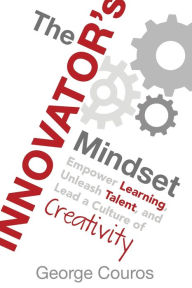
Recently I was gathered around a table of educators discussing our district's move toward 1:1 in our elementary schools. I'm continually reminded how fortunate I am to work in a district that values this shift toward new opportunities for our students. We have always had people working toward the vision of growing the possibilities afforded through digital technologies. There has been careful planning of devices, applications, and professional development, complemented by the side-by-side support of technology coaches to help us through these new steps.
As I've moved from building to building in conversations around these blended learning opportunities, there is a mix of excitement and caution as we take these new steps. Many are excited about the new possibilities that 1:1 will allow our students, but I also sense a bit of caution as educators try to balance this possibility with pedagogy. As I dig deeper into the shift toward digital learning, I realize that it is less about the tools and more about our instructional practices and the opportunities students have as a result of these new tools. Couros reminds us, "Technology can be crucial in the development of innovative organizations, but innovation is less about the tools like computers, tablets, social media, and the Internet, and more about how we use those things."
As educators, we work to do what is best for the children that sit beside us each day. It's the how (his emphasis) that I've been thinking a lot about lately. For me, this shift isn't as much about digital learning as it is about digital literacy. It isn't as much about completing tasks, as it is about intentional decision making. It isn't as much about working independently as it is about connecting to other learners, growing your community beyond your classroom, and having a voice today. It isn't as much about using digital tools as it is about purposefully selecting from a variety of tools, digital or otherwise, to intentionally create and compose a message. It isn't as much about learning how to work digitally as it is about learning to live in the new culture created by the availability of digital technologies. It isn't as much about being a student as it is about becoming a global citizen. It isn't about schooling; it's about education.
These two tweets were among my favorites this week for showing how students can own their learning process and make intentional decisions (note the digital and print decisions):
Ss connected what they read about pumpkin seeds to place and value! They were so excited to share. @AltonDarby pic.twitter.com/1yiERHFdas� Meredith Kleman (@adekleman) September 29, 2016
Slides, iMovie, posters, models - V & C in sharing abt Civil War, Gold Rush, Chinese Architecture & English lang.! @BRN_Elementary @hernonch pic.twitter.com/k1F5SizLUG� Kay Richardson (@KRichardson177) September 29, 2016
Shifting Our Thinking
The how requires a shift in our thinking. I'm going to push Couros's definition for innovation in education one step further by saying that innovation creates "something new and better" and raises the level of learning for students - they own it. Technology allows us to do all kinds of new and better things, but not all of those are best practices. One of my friends has a new saying, "Just because they can, doesn't mean mean we should." If the innovation isn't growing the opportunities and understandings of our learners, if it isn't developmentally appropriate, if it doesn't take our learning to new levels, if it doesn't connect us, then perhaps we need to push ourselves to go deeper.
One of my favorite quotes about change is from Troy Hicks in The Digital Writing Workshop, "When we simply bring a traditional mindset to literacy practices, and not a mind-set that understands new literacies into the process of digital writing, we cannot make the substantive changes to our teaching that need to happen in order to embrace the full potential of collaboration and design that digital writing offers (p.2)." As we move toward 1:1 learning environments we need to be patient with ourselves in this journey, but we also need to ask ourselves the hard question, "What could be different?".

Friday, September 30, 2016
FALLING FOR YOU - Six Contemporary Christian Authors - One Free Ebook

Six brand-new, never released before contemporary Christian romance novellas by beloved inspirational romance authors!
Heather Gray � An Informal Date
What are some of the spiritual themes you like to write about?
When I started out writing my first novel, I didn't realize that some themes were going to stick with me through all of my books. By the sixth or seventh novel, though, I caught on to the fact that a couple of subjects were obviously near and dear to my heart. (What can I say? If I hadn't been so focused on writing, I might have figured it out by book 2!) Sometimes these topics pop up in a short passing conversation between secondary or tertiary characters, and sometimes they show themselves as major issues tackled by the main characters.
As Christians - especially when we've been in church a long time - we sometimes develop certain expectations. We get used to seeing God a certain way, and we forget to look for Him with fresh eyes, eyes of wonder. I know because I've been there. The light bulb went off one day, though, and I realized that I could no longer put God in a box. After all, without Him, there wouldn't even be a box.
The overarching theme that ties my body of work together is all about that box. I like to see people - whether real or fictional - driven to a deeper relationship with their Creator instead of hung up on the rules of Christian living that we've created for ourselves. (Don't get me wrong. God's commands to us are for our own good. Those aren't the rules I'm talking about here.) I want people to experience their relationship with Christ in a real way, a way that changes not just their eternity, but that also impacts every single day they spend here on earth, every relationship they have, and every life event - good or bad - that they experience. I want people to look for God everywhere and not just in that silly old box.


Elizabeth Maddrey � Operation Back-to-School
How do you choose the settings for each book?
Most of the time, I set my books in the Washington D.C. area. In part, this is because that's where I live, so I'm familiar with all the neat things that can be included in a story to make it come alive. And the traffic. You can't write a book set here without mentioning the traffic. But I've also set a book in Ireland, because I love Ireland and it was another situation where the setting simply needed to be in a story. And I'm slowly branching out. My next series is going to surround a woman renovating a gilded age mansion, and you just don't find those here in the suburbs, so I'm moving into the mountains of southern Virginia for that, and looking forward to the challenge.


Krista Phillips � A (Sorta) Southern Serenade
Why do you write the kind of books you do?
I write romance with a splash of humor. I'm a romantic at heart and always have been, so writing romance comes naturally! And there's just something beautiful about the process of two hearts finding a home together! And goodness, I think laughter is such a GOOD medicine, and I personally read for pleasure, so my hope and prayer is that readers enjoy a bit of a comical yet wholesome entertainment when they read by books! If I can make someone smile at the end of a hard day when they pick up my book, then I'm delighted!!


Ginger Solomon � Learning from Experience
If you could spend an evening with one contemporary person (not a family member of yours), who would it be and why?
I�d love to spend an evening with Ted Dekker (and his family). After hearing him speak at the ACFW conference and again in Allen Arnold�s class, I find his relationship with God fascinating. To be truthful I did beforehand, too. He seems to have connected with the Father in a way that draws me to explore my Creator in a deeper way-to move outside of what I�ve been taught and learn what is TRUTH. Of course, if this were to ever happen, I�d be so tongue-tied, I probably wouldn�t be able to say a word.


Carole Towriss � The Other Brother
What other books of yours are coming out soon?
At the beginning of next year, I have my fourth biblical fiction coming out. It�s about Caleb�s daughter, Acsah. Her very short story�five verses�is told twice in Scripture, in Judges and Joshua. Her famous dad offered her as a prize to the man who could conquer a certain city. While that may be appalling to us, that was perfectly in keeping with the times. Caleb appeared in all three of my other books, as a minor character, and I felt I had to explain why he would do something that might seem so �heavy-handed.� So I set it up that he did this because she had already turned down five other men. He needs to see her married to a man of God, and soon. She, on the other hand, wants nothing less than to marry a warrior, soooo � therein lies the conflict. That�s all in the first few pages, so I haven�t spoiled anything! If you know the Bible story, you know she marries her cousin, Othniel, the first judge of Israel, and considered to be the standard for all other judges to follow.


Marion Ueckermann � A Hero for Heather
What is your current work in progress? What�s next?
I�m currently working on a fun Christmas story set in Dublin, Ireland, titled Ginger and Brad�s House. This story will release in the Frosting and Flurries box set during October. Here�s a snippet of the WIP blurb:
A gingerbread house competition at their local church to raise funds for the homeless has Ginger and Brad locking heads once again, both determined to win. When a dear old saint challenges them that the Good Book says the first shall be last, and the last first, Ginger has to decide whether to back down from competing with Brad and embrace the true meaning of Christmas�peace on earth, goodwill to all men. Even to the Irishman she�d love to hate.
After Ginger and Brad�s story, I�ll be writing Books 2, 5 and 6 of my Seven Suitors for Seven Sisters, of which Book 3 is in the Falling for You box set. Next year I plan to write Book 7, the final story in this series, and then I plan to begin working on an exciting 10 book series set in coastal towns in South Africa.


Get your copy today to fall in love with these fall romances.

Thank you, ladies, for sharing this new collection with me and my readers.
Readers, here�s a link to the book. By using it when you order, you help support this blog.
Falling for You: Six Christian Romances to Warm Your Heart - Kindle
Leave a comment for a chance to win a free copy of the book. You must follow these instructions to be in the drawing. Please tell us where you live, at least the state or territory or country if outside North America. (Comments containing links may be subject to removal by blog owner.)
Void where prohibited; the odds of winning depend on the number of entrants. Entering the giveaway is considered a confirmation of eligibility on behalf of the enterer in accord with these rules and any pertaining local/federal/international laws.
The only notification you�ll receive is the winner post on this blog. So be sure to check back a week from Saturday to see if you won. You will have 4 weeks from the posting of the winners to claim your book.
If you�re reading this on Goodreads, Google+, Feedblitz, Facebook, Twitter, Linkedin, or Amazon, please come to the blog to leave your comment if you want to be included in the drawing. Here�s a link:
Http://lenanelsondooley.blogspot.com
Thursday, September 29, 2016
Bridging Writers Author Series
2016-2017
PRESENTS
2016-2017
PRESENTS
Monday, October 3, 2016
6:30 � 8:00 PM
6:30 � 8:00 PM
Thayer Memorial Library
Cal Armistead: Being Henry David


Seventeen-year-old "Hank" has found himself at Penn Station in New York City with no memory of anything--who he is, where he came from, why he's running away. His only possession is a worn copy of Walden by Henry David Thoreau. And so he becomes Henry David--or "Hank"--and takes first to the streets, and then to the only destination he can think of--Walden Pond in Concord, Massachusetts. Cal Armistead's remarkable debut novel about a teen in search of himself. As Hank begins to piece together recollections from his past he realizes that the only way he can discover his present is to face up to the realities of his grievous memories. He must come to terms with the tragedy of his past to stop running and find his way home.
Cal Armistead has been a writer since age 9, when she submitted her first book, The Poor Macaroni Named Joany to a publisher. Sadly, this literary gem did not make it to print. But Cal continued pursuing her lifelong passion, and wrote copiously for radio, newspapers and magazines (Cal has been published in The Chicago Tribune, Shape Magazine, Body & Soul Magazine, Christian Science Monitor, Chicken Soup for Every Mom�s Soul and others). Although it took years for Cal to try her hand again at fiction writing, her first young adult novel (Being Henry David) was published by Albert Whitman & Co. in March,2013. Cal holds an MFA in creative writing from the Stonecoast program at the University of Southern Maine, works at an independent book store, is a voice-over actress, sings semi-professionally, and lives in a Boston suburb with her amazing husband and a dog named Layla.
Subscribe to:
Posts
(
Atom
)


