Showing posts with label George Couros. Show all posts
Saturday, October 1, 2016
#immooc
best practice
change
choice
digital literacy
elementary digital literacy
George Couros
innovation
instructional decision making
ownership
SOCIETY
On Real Innovation: What Digital Literacy Brings Us #immooc
"I'm defining innovation as a way of thinking that creates something new and better." ------ George Couros, The Innovator's Mindset (loc 374)
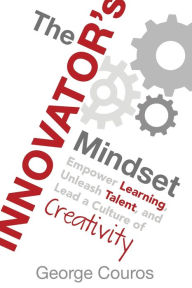
Recently I was gathered around a table of educators discussing our district's move toward 1:1 in our elementary schools. I'm continually reminded how fortunate I am to work in a district that values this shift toward new opportunities for our students. We have always had people working toward the vision of growing the possibilities afforded through digital technologies. There has been careful planning of devices, applications, and professional development, complemented by the side-by-side support of technology coaches to help us through these new steps.
As I've moved from building to building in conversations around these blended learning opportunities, there is a mix of excitement and caution as we take these new steps. Many are excited about the new possibilities that 1:1 will allow our students, but I also sense a bit of caution as educators try to balance this possibility with pedagogy. As I dig deeper into the shift toward digital learning, I realize that it is less about the tools and more about our instructional practices and the opportunities students have as a result of these new tools. Couros reminds us, "Technology can be crucial in the development of innovative organizations, but innovation is less about the tools like computers, tablets, social media, and the Internet, and more about how we use those things."
As educators, we work to do what is best for the children that sit beside us each day. It's the how (his emphasis) that I've been thinking a lot about lately. For me, this shift isn't as much about digital learning as it is about digital literacy. It isn't as much about completing tasks, as it is about intentional decision making. It isn't as much about working independently as it is about connecting to other learners, growing your community beyond your classroom, and having a voice today. It isn't as much about using digital tools as it is about purposefully selecting from a variety of tools, digital or otherwise, to intentionally create and compose a message. It isn't as much about learning how to work digitally as it is about learning to live in the new culture created by the availability of digital technologies. It isn't as much about being a student as it is about becoming a global citizen. It isn't about schooling; it's about education.
These two tweets were among my favorites this week for showing how students can own their learning process and make intentional decisions (note the digital and print decisions):
Ss connected what they read about pumpkin seeds to place and value! They were so excited to share. @AltonDarby pic.twitter.com/1yiERHFdas� Meredith Kleman (@adekleman) September 29, 2016
Slides, iMovie, posters, models - V & C in sharing abt Civil War, Gold Rush, Chinese Architecture & English lang.! @BRN_Elementary @hernonch pic.twitter.com/k1F5SizLUG� Kay Richardson (@KRichardson177) September 29, 2016
Shifting Our Thinking
The how requires a shift in our thinking. I'm going to push Couros's definition for innovation in education one step further by saying that innovation creates "something new and better" and raises the level of learning for students - they own it. Technology allows us to do all kinds of new and better things, but not all of those are best practices. One of my friends has a new saying, "Just because they can, doesn't mean mean we should." If the innovation isn't growing the opportunities and understandings of our learners, if it isn't developmentally appropriate, if it doesn't take our learning to new levels, if it doesn't connect us, then perhaps we need to push ourselves to go deeper.
One of my favorite quotes about change is from Troy Hicks in The Digital Writing Workshop, "When we simply bring a traditional mindset to literacy practices, and not a mind-set that understands new literacies into the process of digital writing, we cannot make the substantive changes to our teaching that need to happen in order to embrace the full potential of collaboration and design that digital writing offers (p.2)." As we move toward 1:1 learning environments we need to be patient with ourselves in this journey, but we also need to ask ourselves the hard question, "What could be different?".

Saturday, September 24, 2016
Innovator's Mindset #IMMOOC
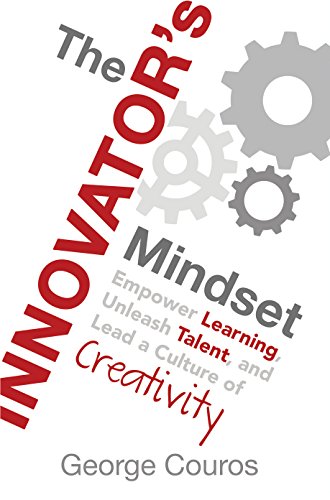
"Change is an opportunity to do something amazing." -George CourosFor the next six weeks, I've decided to join the community conversation around The Innovator's Mindset: Empower Learning, Unleash Talent, and Lead a Culture of Creativity by George Couros. This conversation is being led by George and Katie Martin. You can join the conversation at the #immooc event hub, the Twitter #immooc hashtag, or the Facebook group.
Since that time, schools across our district have been asking that question. What could school look like for our students? Many have started down a path toward revisioning school. We've begun to work toward environments that allow for more personalized learning, utilization of technology, and empowerment of students to truly own their own learning. We're more intentional about creating communities that ask questions, seek new possibilities, collaborate and connect.
It's hard for us to make these changes, but students are living in a different world and our schools need to reflect that world. There are challenges in innovating education. As educators, we're uncomfortable with taking a risk to move toward change. Rigid testing requirements push against authentic learning opportunities. Schedules tie us into routines and make it difficult to flexibly provide innovative opportunities for students.
Perhaps some of the challenge is that we remain focused on content over ways of thinking and learning. We place great value in tasks, over real-world literacy. We focus on achievement over growth, and answers over questions. Couros reminds us, "If schools are only about content and information, that reality poses a threat to educational facilities (loc 170)." He goes on to say, "Although we say we want kids to think for themselves, what we teach them is compliance (loc 190)." How could our schools look different? How could they better prepare students for the world they live in today? When I struggle to know what is right, I push myself to think beyond barriers, beyond schedules and routines, beyond the school I have always known, to my students. What is truly best for the students that sit in front of me each day?
We have the opportunity to begin to change the system for our students. We just have to be brave enough to step forward.
I'm looking forward to this opportunity to revision my thinking with the #immooc community as we discuss innovation in our schools. To begin to innovate, I know I will need to:
Innovate from Cathy on Vimeo. (made with Haiku Deck)
Here a few favorite quotes from the introduction:
- "Change is the opportunity to do something amazing." (loc 149)
- "We forget that if students leave school less curious than when they started, we have failed them." (loc 190)
- "If we want to 'innovate students,' we will need to 'innovate educators (loc 213).'''
- "The focus on compliance and implementation of programs in much of today's professional development does not inspire teachers to be creative, nor does it foster a culture of innovation (loc 213)."
- "We must make time for our teachers to grow (loc 213)."
- "We need to develop shared vision, align expectations, and provide pathways to ensure that all teachers have the resources to learn, create, and innovate to meet the needs of today's learners (loc 213)."
- "The goal isn't to change for the sake of change but to make changes that allow us to empower our teachers and students to thrive (loc 234)."
- "What you can do is create the conditions where change is more likely to happen. As a leader, you can create those conditions by taking a strengths-based approach for learning and leadership and unleashing the talent in your organization (loc 256)."
- "Create school cultures in which values such as originality, creativity, critical thinking, collaboration, and an unquenchable thirst for knowledge are the norm of our students, our teachers, and ourselves (loc 297)."
(Yep, that's just the introduction....can't wait to read on...)
Subscribe to:
Posts
(
Atom
)


