Showing posts with label ownership. Show all posts
Thursday, November 3, 2016
When They're Not Beside Us

Lately, I've been thinking about a new question, "What are they doing when they aren't beside us?".
Early in my teaching career, I realized the power of being intentional when students were beside me. Whether in a guided reading lesson, conferring with a reader or writer, or leading some type of small group instruction, I have come to understand the power of sitting beside students to guide their next steps. To have time to sit beside students, we create structures of learning to allow us more opportunities for targetted support and instruction. Of course, at their best, these structures allow students to take ownership of their learning giving time to learn new strategies, make discoveries, and work toward new goals. At their worst, they are elaborate structures that keep students busy so we can do the work we need to beside students.
So what are students doing when they aren't beside us? I've come to learn that what they're doing when they're not beside us may be more important than what we do when we're sitting beside them. How do we set students up for meaningful learning as we support learners in our classroom communities? In my career, I've seen teachers move from sage on the stage to guide on the side to coach on approach (sorry, I just had to continue the rhyme, but you get my point). As we move toward environments that value student ownership and agency, our role has changed. This isn't always comfortable for us as we are used to managing and controlling. It isn't easy to trust children to lead and to learn, to be flexible on our feet. It's a different kind of planning where we know what we want students to learn, but we allow them to find their own path to get there.
It's messy...and it's powerful. (Debbie Miller talks more about this here: Letting Kids "Dig In")
For simplicity sake, let's consider for a moment that a teacher may spend forty-five minutes in small group reading lessons. During that time a student might be beside the teacher for fifteen minutes. That means the student spends thirty minutes on her own in the workshop. Let's say that student is seen three times in a week; that equates to forty-five minutes with the teacher during that block for a week and three hours and forty-five minutes on her own. Now think about that across the day. The week. The month. The year.
So often we measure student success by the time a teacher is beside a student, but what if it is exactly the opposite. What if students make the most progress when they drive their own learning? What if the ways we help build agency in our classroom are more powerful than the time students spend in explicit instruction?
If we're going to send students off on their own, we want to set them up to use their time to learn. These structures have to allow continued learning and move beyond creating opportunities for us to teach.
Here are a few considerations I've found help set students up for learning opportunities:
- Allow students opportunities for real work.
- Have a community learning focus.
- Be intentional in focus lessons.
- Create charts that make learning visible.
- Take time for a reflective share.
- Allow students to set their own learning goals.
- Be willing to adjust when things get messy.
- Trust them.
Saturday, October 1, 2016
#immooc
best practice
change
choice
digital literacy
elementary digital literacy
George Couros
innovation
instructional decision making
ownership
SOCIETY
On Real Innovation: What Digital Literacy Brings Us #immooc
"I'm defining innovation as a way of thinking that creates something new and better." ------ George Couros, The Innovator's Mindset (loc 374)
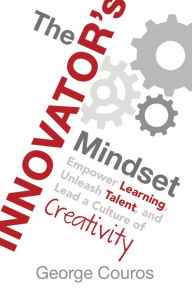
Recently I was gathered around a table of educators discussing our district's move toward 1:1 in our elementary schools. I'm continually reminded how fortunate I am to work in a district that values this shift toward new opportunities for our students. We have always had people working toward the vision of growing the possibilities afforded through digital technologies. There has been careful planning of devices, applications, and professional development, complemented by the side-by-side support of technology coaches to help us through these new steps.
As I've moved from building to building in conversations around these blended learning opportunities, there is a mix of excitement and caution as we take these new steps. Many are excited about the new possibilities that 1:1 will allow our students, but I also sense a bit of caution as educators try to balance this possibility with pedagogy. As I dig deeper into the shift toward digital learning, I realize that it is less about the tools and more about our instructional practices and the opportunities students have as a result of these new tools. Couros reminds us, "Technology can be crucial in the development of innovative organizations, but innovation is less about the tools like computers, tablets, social media, and the Internet, and more about how we use those things."
As educators, we work to do what is best for the children that sit beside us each day. It's the how (his emphasis) that I've been thinking a lot about lately. For me, this shift isn't as much about digital learning as it is about digital literacy. It isn't as much about completing tasks, as it is about intentional decision making. It isn't as much about working independently as it is about connecting to other learners, growing your community beyond your classroom, and having a voice today. It isn't as much about using digital tools as it is about purposefully selecting from a variety of tools, digital or otherwise, to intentionally create and compose a message. It isn't as much about learning how to work digitally as it is about learning to live in the new culture created by the availability of digital technologies. It isn't as much about being a student as it is about becoming a global citizen. It isn't about schooling; it's about education.
These two tweets were among my favorites this week for showing how students can own their learning process and make intentional decisions (note the digital and print decisions):
Ss connected what they read about pumpkin seeds to place and value! They were so excited to share. @AltonDarby pic.twitter.com/1yiERHFdas� Meredith Kleman (@adekleman) September 29, 2016
Slides, iMovie, posters, models - V & C in sharing abt Civil War, Gold Rush, Chinese Architecture & English lang.! @BRN_Elementary @hernonch pic.twitter.com/k1F5SizLUG� Kay Richardson (@KRichardson177) September 29, 2016
Shifting Our Thinking
The how requires a shift in our thinking. I'm going to push Couros's definition for innovation in education one step further by saying that innovation creates "something new and better" and raises the level of learning for students - they own it. Technology allows us to do all kinds of new and better things, but not all of those are best practices. One of my friends has a new saying, "Just because they can, doesn't mean mean we should." If the innovation isn't growing the opportunities and understandings of our learners, if it isn't developmentally appropriate, if it doesn't take our learning to new levels, if it doesn't connect us, then perhaps we need to push ourselves to go deeper.
One of my favorite quotes about change is from Troy Hicks in The Digital Writing Workshop, "When we simply bring a traditional mindset to literacy practices, and not a mind-set that understands new literacies into the process of digital writing, we cannot make the substantive changes to our teaching that need to happen in order to embrace the full potential of collaboration and design that digital writing offers (p.2)." As we move toward 1:1 learning environments we need to be patient with ourselves in this journey, but we also need to ask ourselves the hard question, "What could be different?".

Subscribe to:
Posts
(
Atom
)


