Showing posts with label Kristin Ziemke. Show all posts
Saturday, November 5, 2016
Debbie Miller
Franki Sibberson
Gay Su Pinnell
human
Irene Fountas
Jennifer Serravallo
Karen Szymusiak
Katie Muhtaris
Katie Wood Ray
Kristin Ziemke
new teachers
professional_reading
Professional Books for New Teachers
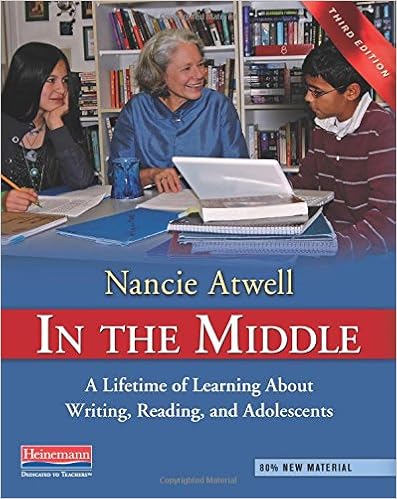
The first years were hard. Thankfully there were professional books. It wasn't long after I started teaching that Nancie Atwell wrote, In the Middle: Writing, Reading and Learning with Adolescents now in its third edition. To this day, I consider this book to be one of the professional books that helped shape my work as an educator and honestly may have kept me teaching.
Authors of professional books about education continued to improve my work when I moved grade levels, noticed parts of my teaching that I needed to grow, or joined groups of educators hoping to study teaching in greater depth. Authors like Gay Su Pinnell, Irene Fountas, Debbie Miller, Franki Sibberson, Katie Wood Ray, Ralph Fletcher, Shelley Harwayne, and Troy Hicks all played a part in important shifts in my teaching.
Professional Books for New Teachers
I've been doing a lot of our work with our newest teachers. I've found their conversations engaging as they work to take what they know and solve new questions they're finding as they work alongside children each day. In addition to working with new teachers, my son is doing his student teacher this year. All of these conversations have me thinking about professional books I'd recommend to new teachers. Here are a few titles I recommend as teachers begin:
Primary Teachers
 |
by Irene Fountas and Gay Su Pinnell |
 |
| About the Authors:Writing Workshop with Our Youngest Writers by Katie Wood Ray with Lisa Cleveland |
 |
| Reading with Meaning:Teaching Comprehension in the Primary Grades by Debbie Miller |
For Intermediate
 |
| Still Learning to Read:Teaching Students in Grades 3-6 by Franki Sibberson and Karen Szymusiak |
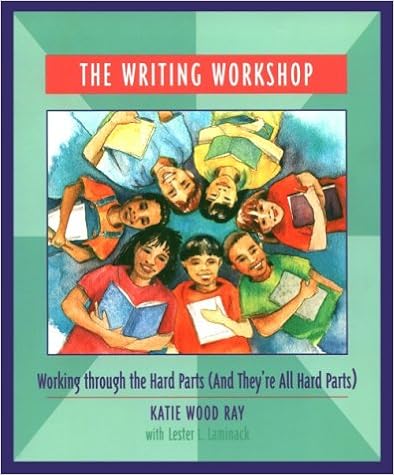 |
| The Writing Workshop: Working through the Hard Parts (And They're All Hard Parts) by Katie Wood Ray |
 |
| Digital Reading: What's Essential in Grades 3-8 by Franki Sibberson and Bill Bass |
For All
 |
| The Reading Strategies Book: Your Everything Guide to Developing Skilled Readers by Jennifer Serravallo |
 |
| Amplify: Digital Teaching and Learning in the K-8 Classroom by Katie Muhtaris and Kristin Ziemke |
 |
| Teaching with Intention: Defining Beliefs, Aligning Practice, Taking Action K-5 by Debbie Miller |
There have been so many books written that it was hard to narrow to these titles. These seem to be the books that help when thinking about the foundations of our work. If you have favorite recommendations for new teachers, I hope you'll share them in the comments.
Saturday, February 27, 2016
#dublit16
Amy Ludwig VanDerwater
Bob Probst
Dublin_Literacy Conference
Kristin Ziemke
Kylene Beers
SEX
The Power of Three Little Words #dublit16

As a classroom teacher, I always tried to watch my words. I always tried to measure their frequency with student frequency. I'm not saying I was always good about it; I'm saying I tried. There was the continual sound of Charlie Brown's teacher droning on in animated films, "Wah, wah, wah," playing in the back of my mind. I didn't want to sound like that to my students. There are lessons I remember teaching in which I know I spent too much time talking. Talk helps students to learn, and I always felt their talk really made the difference.
As an intervention teacher, I find myself challenged continually by this thinking. I don't have the same time to move from explicit to implicit in my short lessons with students. I don't have the same time to wander through conversations. If I'm not careful, it is easy to fall into patterns where I am doing most of the talking. When this happens, I know that I am doing more telling and owning more of their learning.
Words can be powerful. The language we use can support learners and help them to develop agency. However, some words are stronger than others in supporting our learners. I was reminded of this recently as I joined educators for a Saturday of learning at the Dublin Literacy Conference as I listened to speakers across the day. Here are short phrases I took away that could open up dialogue for students:
Kylene Beers and Bob Probst: "What Surprised You?"
Kylene Beers and Bob Probst, spoke about Responsive and Responsible Reading of Nonfiction. In their session they reminded us of the importance of dialogic talk that opens conversations for students instead of monologic talk that checks for understanding. In their conversation they shared three simple words to start conversations about reading, "What surprised you?". These three words carry much power in turning conversations about reading over to students. Kylene reminded us that rigor didn't reside in the text itself but, instead, in the the interaction between the reader and the text.
Kylene Beers and Bob Probst, spoke about Responsive and Responsible Reading of Nonfiction. In their session they reminded us of the importance of dialogic talk that opens conversations for students instead of monologic talk that checks for understanding. In their conversation they shared three simple words to start conversations about reading, "What surprised you?". These three words carry much power in turning conversations about reading over to students. Kylene reminded us that rigor didn't reside in the text itself but, instead, in the the interaction between the reader and the text.
Amy Ludwig VanDerWater: "Let Poetry Speak"
One of the highlights of my day was spending time with poet, Amy Ludwig VanDerWater. In her session, Our Wisest Writing Teacher, she reminded us of the power of poetry in teaching writing. I'm going to say that I struggled a bit more bringing Amy's words down to three I took away. She had so many smart things to say about poetry --- andstudents children humans souls. Amy reminded us that poetry speaks to children and helps them to see they are not the only one. I had so many phrases I pulled from her session (some three words, some not): poetry as gift, poetry as a diving board into writing, poems teach us about writing, poems teach us about language. Of course my favorite lines were her closing lines, "Poetry is enough by itself. Poetry places unforgettable images in the hearts of our children."
Kristin Ziemke: "Tell Me More."
Later in the day, I attended Kristin Ziemke's session, Read the World: Literacies for a Digital Culture, where three words caught my attention again. Kristin shared that we are moving away from fact recall curriculums, toward search curriculums; I might even venture to say we are moving toward curriculums that position students to create. The room was packed with teachers as Kristin demonstrated ways to build intention as we talk with students about reading images for understanding. Kristin put a video of Michigan's governor, talking about the Flint water crisis, on the screen. After viewing we talked about what we noticed. One teacher shared her response. Kristin listened to the response, paused thoughtfully, and inquired, "Tell me more." Her words really asked the speaker to dig a little deeper into their thinking, and to share that with the learning community. I was once again struck by the powerful simplicity of three little words.
One of the highlights of my day was spending time with poet, Amy Ludwig VanDerWater. In her session, Our Wisest Writing Teacher, she reminded us of the power of poetry in teaching writing. I'm going to say that I struggled a bit more bringing Amy's words down to three I took away. She had so many smart things to say about poetry --- and
Kristin Ziemke: "Tell Me More."
Later in the day, I attended Kristin Ziemke's session, Read the World: Literacies for a Digital Culture, where three words caught my attention again. Kristin shared that we are moving away from fact recall curriculums, toward search curriculums; I might even venture to say we are moving toward curriculums that position students to create. The room was packed with teachers as Kristin demonstrated ways to build intention as we talk with students about reading images for understanding. Kristin put a video of Michigan's governor, talking about the Flint water crisis, on the screen. After viewing we talked about what we noticed. One teacher shared her response. Kristin listened to the response, paused thoughtfully, and inquired, "Tell me more." Her words really asked the speaker to dig a little deeper into their thinking, and to share that with the learning community. I was once again struck by the powerful simplicity of three little words.
Magic comes in threes. Perhaps thinking of three words to elevate student learning across our day is worth consideration. Of course, the magic of the Dublin Literacy Conference wasn't just words; it was learning, laughter, friendship, conversations, community, and guests from afar.
Kristin and I had a little fun as she signed my digital copy of her book at the conference. This picture was taken by Marisa Saelzler and posted by Kristin on her Instagram account:
Thinking More About Words? You might like:
- Karen Syzmusiak returns to her blog with, Powerful is Not Perfect. In her post, she shares powerful words from Kristin Ziemke: word to set us free.
- Nicole Kessler, also returning to her blog, just wrote about Classroom Language as she reflected on the power of open ended questions.
- Changing My Frame, a post written to consider the work of Peter Johnston in my classroom.
- Speaking of Peter Johnston. These books changed the language I use with students (and - ouch - it shifted my talk at home).
- Don't let the cover of this one fool you. We're reading Using Discourse Analysis to Improve Classroom Interaction in a course I am taking with Dr. Melissa Wilson at Ohio State. I appreciate the way the authors have us thinking through our language and the contexts of interactions to improve our language.
Subscribe to:
Posts
(
Atom
)


