Showing posts with label #pb10for10. Show all posts
Wednesday, August 10, 2016
#pb10for10
2016 picture book event
August Picture Book 10 for 10
children's_literature
POLITICS CHARACTER
Picture Book Lessons for Teaching #pb10for10

My Past 10 Collections
- 2015: 10 Books That Take You Into the Night
- 2014: 10 Books About Being Brave
- 2013: 10 Newer Authors/Illustrators I Love
- 2012: 10 Mentor Texts for Young Writers
- 2011: 10 Authors I Can't Live Without
- 2010: 10 Must-Have Picture Books
My 2016 #pb10for10: Stories for My Son (The Student Teacher)
Determining my focus for this year's picture book celebration wasn't hard. You see, this year our son will be completing his education program. We're pretty excited for him. He is an early education major and will be doing his student teaching in the coming school year. These next months will teach him much. My #pb10for10 collection this year has him in mind. I'm sharing ten books his young readers will love, but titles that will also help him to remember some important things about growing a community of learners. In no particular order....

Some kids like to do new things, want to talk, and enjoy being the center of everything. Other kids like the quiet, prefer working by themselves and aren't as eager to volunteer. Get to know your students and their preferences...and respect them for who they are. Help them to feel safe in your learning community.
I Love You Already by Jory John and Benji Davies (2016): Bear is all settled in for a quiet day. Duck has a different idea. Duck comes over to Bear's house to get him to come out and do something. What happens when two friends want to do completely different things? Readers will fall in love with these characters who help us to understand you can be different, but still be friends.

Kids need to move. Books are one way to give them opportunities to let them move around.
Is Everyone Ready for Fun? by Jan Thomas (2011). This book has never let me down. Kids love to join the cows as they dance and move on chicken's sofa. The repetitive pattern in the text, bright illustrations, and fun characters make this a book that is loved by all.
"Make them laugh."
 Kids love to laugh. Yes, books with titles like this one will surely get a laugh. There will be so many opportunities to laugh with your students. Enjoy them.
Whose Butt? by Stan Tekiela (2012). Yes, I'm sliding in an informational text, but how could I resist? There's nothing like laughing with students, and kids won't be able to resist a laugh with this one. The author shows photographs of the back end of animals and readers have to try to guess the animal. He includes interesting facts that will surely get kids asking questions.
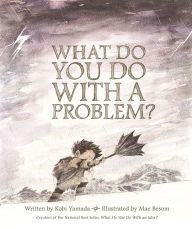 "Every problem is an opportunity."
We can see problems as problems or we can view them as opportunities.
What Do You do with a Problem written by Kobi Yamada and illustrated by Mae Besom (2016): In this story, the boy is given a problem. He didn't want a problem, but he had one anyway. He tried to get rid of it with no luck. What could he do? We can learn a lot from this character as he works his way through this challenge and finds a way to begin to fix it. The illustrator starts the story with little color as the problem takes over. Illustrations are brown (or maybe dark gray) and white. As he begins to work through it, the illustrator begins to add color and the situation brightens.
"Mix it up."
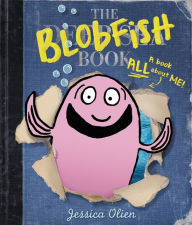 While routine and structure can make it easy for students to work and learn, there are times to mix it up. When the pace of the work seems too slow or the enthusiasm wanes, mix it up.
 The Blobfish Book by Jessica Olien (2016): This book is so much fun. This book is supposed to be an informational book about the ocean, but Blobfish is sure he should be a part of it. He walks across pages campaigning to be a part of the story. The author has used ocean photographs that cover the page from top to bottom which often include ocean information. A caricature of Blobfish is imposed on each page. Through speech bubbles, Blobfish interrupts the story to tell his part.

Young writers often don't know the power of their stories. Though a lot happens in their daily lives, they don't often realize the significance.
My Dog Spot by Jack E. Levin and Norma R. Levin (2016): In this story, the authors write about their dog, Spot. Each double page spread tells us about Spot's looks, life, and activities. This book, with its simplistic structure and illustrations, makes a great mentor text for young writers.
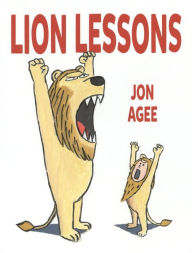
Help students to see all that is possible by modeling. Showing students how will help them to take next steps.
Lion Lessons by Jon Agee (2016): When this student tries to earn his lion diploma, things don't go quite as planned. Being a lion isn't easy work. His teacher patiently models lion technique and shows him how to do all the things a lion should do.

Learning is a partnership between us, students, and their families. The more we take the time to communicate with families and get to know them, the easier it is to meet the needs of our learners.
Hello, My Name is Octicorn by Kevin Diller and Justin Lowe (2016): Octicorn isn't your ordinary octopus. His mom is an octopus and his dad is a unicorn. Octicorn tells readers about his life and his family. He also shares how hard it can be to fit in when you are an octicorn. This book could help support conversations about differences, fitting in, acceptance, and family diversity.
"Be ready for surprises."
 Sometimes you'll be unsure of next steps, but if you listen carefully the kids will tell where you to go. They'll throw out the perfect gem at just right the moment.
 It Came in the Mail by Ben Clanton (2016):
Liam loved to get mail. The problem was, he wasn't getting any. Though he patiently waited and waited no mail came. Liam decided he'd have to write a letter if he wanted to get something in the mail.

Remember that every day is an adventure. Learn from those around you, both students and other educators. Climb the biggest hills, dig deep into the dirt, discover new paths, and take a few risks. As Atkinson reminds us in this book, "Explorers are prepared for everything."
Explorers of the Wild by Cale Atkinson (2016): This picture book, from the author of To the Sea, is one of my favorite new finds. In this book, a young boy goes out to explore. He's pretty excited about his upcoming journey into the woods, but he knows there can be danger in the wild. When he runs into a bear he is, at first, a little frightened, but Bear is an explorer too. Together exploring is even better.
This story inspires curiosity, exploration, and could help begin the discussion about being willing to try new things and take risks. While the story is well worth a read, the illustrations add to the adventure. These full page illustrations and double page spread help to tell the story of two explorers. The brightness of the illustrations and detail of each page make this a book children will love to hear.
Sunday, July 10, 2016
#pb10for10
August Picture Book 10 for 10
BE YOURSELF
children's_literature
Mandy Robek
Picture Book 10 for 10
It's Almost Time for Our Annual Picture Book Event: Picture Book 10 for 10

If you're new to the event, we're glad you will be joining us.
Here's how you can participate:
- Grab a Badge (just copy the URL address of the one above or take a screenshot)
- Join the #pb10for10 Google Community
- Choose Your Favorites: All you need to do is choose ten picture books you cannot live without for whatever reason. In the first days of this event, everyone shared their ten very favorite titles. This still works. You will notice, however, that many past participants choose some type of theme to determine their selections. We'll leave this up to you.
- Narrow Your List to Ten: It isn't easy, is it? We've seen some crafty ways to get around that number.
- Write Your August 10th Post: Write a post about the ten books you cannot live without. Share your post on August 10th and link it to the Picture Book 10 for 10 Community.
- No Blog? No Problem: If you don't have a blog, this might be the perfect time to start one --- or there are a million digital ways to join (see post below). Of course, now with the Google Community it is quite easy to just post your favorites directly into the community without a blog. We will also be tweeting from the #pb10for10 hashtag.
- Comment: On August 10th (and maybe for a week --- there are a lot of posts) take some time to read posts from other participants. Please comment on at least three.
Pull out your library cards, load up your Amazon accounts, or better yet - plan a trip to your local bookstore on August 11th because you're going to be unable to resist checking out (or purchasing) a few new picture books. We hope to see you on the 10th!
A Few Historical and Informational Posts:
- Mandy's Picture Book 10 for 10 Announcement
- The story of how Picture Book 10 for 10 got started
- Choosing Picture Books
- So You Don't Have a Blog: 10 Ways to Still Join #pb10for10 Event (now add direct posting to Google Community...let me +1 that...ha ha)
- Nerdy Book Club: Picture Book Addict? Join Us
- What happened to the old archives? (or Jog the Web shut down)
- Can You Help? Rebuilding Our Picture Book 10 for 10 Archives A must read for past participants
- Find out about our Nonfiction Picture Book Event (each February)
Friday, February 19, 2016
It's Time: 2016's Nonfiction 10 for 10 Event is Today #nf10for10
It's finally here. Today is our nonfiction picture book event: #nf10for10. This is our 4th annual nonfiction event. In the past Mandy Robek of Enjoy and Embrace Learning, Julie Balen of Write at the Edge, and I have cohosted this event. Again this year all activity will be collected on our Picture Book 10 for 10 Community. Stop by to read, share your favorites, and/or link up.
Ways to participate:

Ways to participate:
- Write a blog post with your 10 favorite nonfiction books and link your blog to our Picture Book 10 for 10 Google Community. (You will be unable to post until you have requested to join. I'll try to keep an eye on requests all day.)
 |
| Add your 2016 nonfiction post here. |
- Leave your favorites directly on our Picture Book 10 for 10 Google Community site.
- Feeling creative? We love that! Try a new way to share your titles (a few suggestions).
- Tweet your favorites using the hashtag #nf10for10.
- Try to comment on at least three posts in the event.
Please note: If you've participated in past events, we would love it if you could add your previous posts to the tabbed year of the event. We're trying to recreate past resources.
10 Nonfiction Picture Books
In previous nonfiction events, I've shared:
Maybe I've changed my mind three or four times about the focus of this list for this year's nonfiction picture book event. It's really not unusual. When we first created this event, my hope was to fix my nonfiction book gap. I'm always on the learning curve when it comes to nonfiction. Personally, I read quite a bit of nonfiction, but when it comes to working with young literacy learners I have to work to weave nonfiction into our workshops.
So this year, I have decided to share ten nonfiction picture books by authors I just can't live without. I'm always looking for nonfiction books that approach this type of writing in new ways. (So a few these books might walk the line between fiction and nonfiction.) Here are ten authors I can't live without in my classroom library. I hope you'll share some of your favorite authors in the comments below.
Here we go:
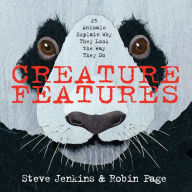 Steve Jenkins is really one of my favorite nonfiction picture book authors. You just can't go wrong with his books, and there are possibilities to span the grade levels. His texts are always engaging for students, and the structures are varied enough to model many possibilities for student writing. This book, Creature Features, is written by Jenkins and Robin Page. The pages begin with a question about the creature. The creature then answers the question with a bit of information. This book inspires wonder and opens the door to curiosity.
I love the way Jenkins takes a topic and thinks about it through a new lens. Some of my favorites include: What Do You Do With a Tail Like This, Time to Eat, and Actual Size.
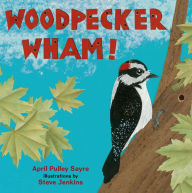 April Pulley Sayre is another can't miss nonfiction picture book author. My attraction to Sayre's work is her way with words. She really has a gift for making language that will roll off your tongue. Her books are always perfect for read aloud. Like many of her books, Sayre's Woodpecker Wham!, illustrated by Steve Jenkins, has a literary flow, but is filled with interesting information in the back to tell you more. Her books are sure to inspire wonder as her words draw you in and make you want to know more. Some of my favorites include: Raindrops Roll, Eat Like a Bear, and Turtle, Turtle, Watch Out.
 Nicola Davies is the master of combining narrative and nonfiction. In one of her newest stories, I
 Don't Like Snakes (illustrated by Luciano Lozano), she does just that once again as the story of a girl who doesn't like snakes --- living in a family that does --- shares her story. The narrative sitting beside interesting facts about snakes is sure to be a crowd pleaser. Yes, the lines of nonfiction and narrative can be quite blurry but, it's one of the things I love most about Davies' work. A few other favorites: Surprising Sharks, Outside Your Window, and White Owl, Barn Owl.
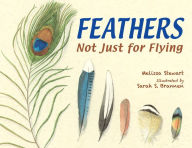 Melissa Stewart is another must have in every classroom library. Melissa has a wide variety of texts for students to read and enjoy. I appreciate the variation in text structures she uses, proving that intentional decision making is important in sharing a message with readers. Feathers: Not Just for Flying (illustrated by Sarah Brannen) is one of my favorites. What kids haven't spent some time collecting feathers? Stewart gives readers a way to think about studying them closely. A few of my other favorites: Frog or Toad, No Monkeys, No Chocolate and don't miss her National Geographic Reader titles --- always a hit.
 Joyce Sidman is another author to consider as you find nonfiction for your classroom. I like to have a variety of author style's in my classroom, and poetry can't be missed. Sidman's ability to weave poetry and information is engaging. Her work certainly opens the door for young writers as well who might like to combine information and wondrous words. This book combines beautiful illustrations by Rick Allen, poetic words, and information not to be missed. Other collections not to be missed: Just Us Two, Swirl by Swirl and Dark Emperor.
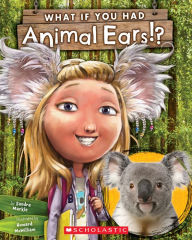 Sandra Markle is a recent addition to my nonfiction author list. More and more I come across books and say to myself, "I didn't know this was written by Sandra Markle." Like Stewart, Markle varies her style to match her purpose. Students enjoy spending time with her books. One of the books I'm seeing students pick up over and over again is part of a What If Scholastic series. What If You Had Animal Ears!? sure makes you ask a lot of questions. With illustrations by Howard McWilliam, students will spend much time looking at pictures and reading interesting facts. A few other favorites: How Many Baby Pandas?, Snakes: Biggest, Littlest......and I must get my hands on a copy of Build, Beaver, Build.
 Nic Bishop's titles are plentiful. His books seem to be a bit more informational and follow more of what I might expect from traditional (for lack of a better word) nonfiction with its facts and photographs. Kids are memorized by his titles and there is certainly plenty to choose from. The photographs really pull the reader into the books. Other favorites: Is It an Insect, Red Eyed Tree Frog, and Fantastic Flying Squirrels.
 Jennifer Ward. I'm just getting to know Jennifer Ward's work, but I am enjoying what I have found so far. You may have noticed I have a bias toward books that fall more toward the literary side of nonfiction; books that can be read aloud and make students want to hear more, know more. Mama Build a Little Nest (illustrated by Steve Jenkins --- he's a busy man) was the first one I discovered, but I soon found she has many more worth checking out. Ward has several picture books: some fiction, some sitting the border of fiction and nonfiction, and many more coming in the next few years. Keep your eyes on Jennifer Ward.
 Jane Yolen is one of those "go to" authors that never lets you down. We typically think of her narrative work, but I also love Yolen's poetry. I have a soft spot, for what I will call nonfiction poetry: poetry that weaves facts into a poem or uses shared facts to help build the poem. An Egret's Day (with photographs by Jason Stemple) is among my favorite. Bug Off, Birds of a Feather, and Least Things.
 Andrea Davis Pinkney. I can't complete this post without considering biography and historical nonfiction. It seems to me that this is one genre that is opening new doors for picture book readers. Authors are bringing important stories into our classrooms in a way children can understand. Andrea Davis Pinkney is an example of an author that is doing just that. One of my favorite titles is Sit-in: How Four Friends Stood Up by Sitting Down (illustrated by Brian Pinkney). Others to consider: Ella Fitzgerald, Martin and Mahalia, and Sojourner Truth's Step-Stomp Stride.
So this year, I have decided to share ten nonfiction picture books by authors I just can't live without. I'm always looking for nonfiction books that approach this type of writing in new ways. (So a few these books might walk the line between fiction and nonfiction.) Here are ten authors I can't live without in my classroom library. I hope you'll share some of your favorite authors in the comments below.
Here we go:
I love the way Jenkins takes a topic and thinks about it through a new lens. Some of my favorites include: What Do You Do With a Tail Like This, Time to Eat, and Actual Size.
Monday, August 10, 2015
Picture Book 10 for 10: Into the Night

My Past 10 Collections
2014: 10 Books About Being Brave
2013: 10 Newer Authors/Illustrators I Love
2012: 10 Mentor Texts for Young Writers
2011: 10 Authors I Can't Live Without
2010: 10 Must-Have Picture Books
This Year: Ten Books About the Night
This year I have struggled with my ten for ten list. I've changed my mind at least ten times. I'd love to tell you about the ideas I decided not to choose, but I might need them in the future. ;o) (Thanks to Carrie Gelson, I now have a future #pb10for10 list.) Since today's the day, I have to decide. It's a bit like being at a restaurant when the waitress arrives to take your order, you just have to make a decision.
So...
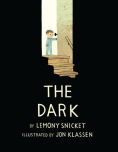
This year I'll be sharing ten picture books about the night. Young children are fascinated - and often fearful - of the night. Sharing books about the night can provide opportunities for children to talk about these fears and share ways they have worked to overcome them. Additionally, there are a lot of great books about the night so here are my favorites:

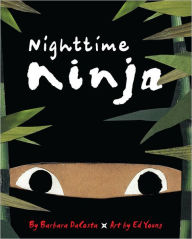
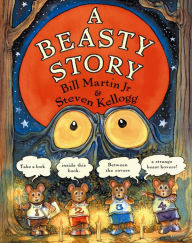
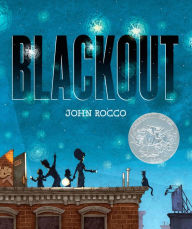
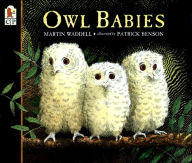
 I Need My Monster by Amanda Noll and Howard McWilliam (2009). I just can't get enough of this story. When his monster takes a vacation, Ethan can't sleep. Several substitute monsters arrive, but none are as scary and perfect as Ethan's monster. Kids' imaginations will run wild in this funny story about monsters under the bed.


Saturday, August 1, 2015
Ten Days Until Picture Book 10 for 10 #pb10for10
Six years ago, Mandy Robek and I were discussing the "must have" books for our classroom libraries. We began to wonder which books other teachers just had to have on their shelves. We decided we'd ask everyone and Picture Book 10 for 10 was born. Since that time the event has grown. The Picture Book 10 for 10 Community now hosts over one hundred members. This year will be our first year to host the August event from our Google Community since Jog the Web shut down making it impossible to curate from there. (Our February Nonfiction Picture Book 10 for 10 was hosted in the Google Community.)
Of course, I can't wait to see everyone's selections. Many participants have already been talking about their lists, and I look forward to seeing their favorites or the interesting themes they've chosen to share this year. It's going to be great! Tell your friends and get ready to join the fun.
If you're new to the event, we're glad you will be joining us.
Here's how you can participate:
- Grab a Badge (just copy the URL address of the one above or take a screenshot)
- Join the #pb10for10 Google Community
- Choose Your Favorites: All you need to do is choose ten picture books you cannot live without for whatever reason. In the first days of this event, everyone shared their ten very favorite titles. This still works. You will notice, however, that many past participants choose some type of theme to determine their selections. We'll leave this up to you.
- Narrow Your List to Ten: It isn't easy, is it? We've seen some crafty ways to get around that number.
- Write Your August 10th Post: Write a post about the ten books you cannot live without. Share your post on August 10th and link it to the Picture Book 10 for 10 Community.
- No Blog? No Problem: If you don't have a blog, this might be the perfect time to start one --- or there are a million digital ways to join (see post below). Of course, now with the Google Community it is quite easy to just post your favorites directly into the community without a blog. We will also be tweeting from the #pb10for10 hashtag.
- Comment: On August 10th (and maybe for a week --- there are a lot of posts) take some time to read posts from other participants. Please comment on at least three.
Related Posts:
- Mandy's Picture Book 10 for 10 Announcement
- Choosing Picture Books
- So You Don't Have a Blog: 10 Ways to Still Join #pb10for10 Event (now add direct posting to Google Community...let me +1 that...ha ha)
- Nerdy Book Club: Picture Book Addict? Join Us
- Can You Help? Rebuilding Our Picture Book 10 for 10 Archives A must read for past participants
- Find out about our Nonfiction Picture Book Event (each February)
Sunday, July 26, 2015
#CLMOOC
#cyberPD
#digilitSunday
#pb10for10
BE YOURSELF
digital communities
Google Community
Google Plus
DigiLit Sunday: Google Communities for Collaboration

I've never been one to post a lot on Google Plus which seems like a collision of Facebook and Twitter. In the last year, however, I've been working more and more in Google Communities. I have come to find Google Communities to be one of the best spaces to grow collaborative communities around common goals.
Google Communities allow you to bring a group together publicly or privately. You then write a description, create your home, invite members, and you're ready to go. Within a Google Community you can create subtopics to keep your conversations organized. Participants can post using more than 140 characters (an advantage over Twitter) and add links, images, video, etc. to their posts. The posts then stay connected in one space making them easy to read and discuss. Participants can then comment directly under the post which helps to keep ideas tied together.

I have found Google Communities to work for local groups collaborating. How often do you leave a meeting and have something you'd like to add or ask about a topic of discussion? How often are you working on a project and locate links the connect to the work your group is doing? Google Communities allow you to keep the conversation going. As educators, Google Communities work for professional book talks, bringing buildings together, helping leaders who work together even though they may be spread across locations, and supporting groups collaborating toward a common goal. They add the convenience of allowing participants to work around the challenge of finding common time, and instead joining the conversation as their lives allow.
While I have found Google Communities to be a great space to build local conversations, they also open the door to collaborating with others interested in the same topic from around the world. Recently, Julie Johnson and I opened a "digital playground" community for some professional development we were hosting within our school district around digital making and growing our digital literacy understanding. We opened the "playground" up to others around the world. Our group grew to include participants from other timezones and countries. We all benefited from the variety of learners and expertise in our digital community. I participate in communities like the CLMOOC where educators from around the world collaborate around an idea, and host communities with participants from a variety of timezones talking about ideas in which we have mutual interest like #pb10for10 (Picture Book 10 for 10 Community with picture book celebrations) and #cyberPD (annual summer book talk).
A Google Community isn't perfect. There can be challenges in following conversations, keeping up with posts, and finding important links. It seems that having a page to host links and more static information in an organized manner would be helpful. Hosting pages within Google Communities might accomplish some of these goals (as far as I know, at this time Google Sites cannot be hosted within a community though a link could be added). However, for me, Google Communities still seems the smartest space to work and collaborate digitally.
Subscribe to:
Posts
(
Atom
)


